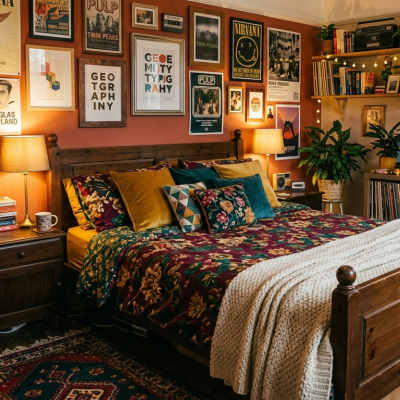
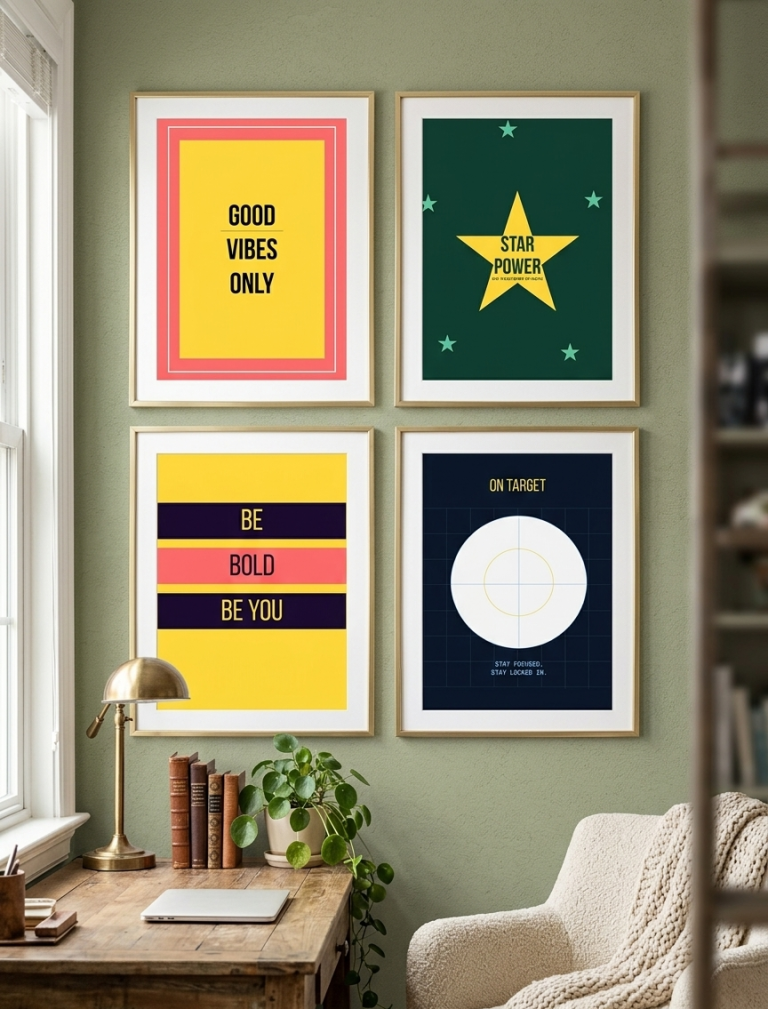
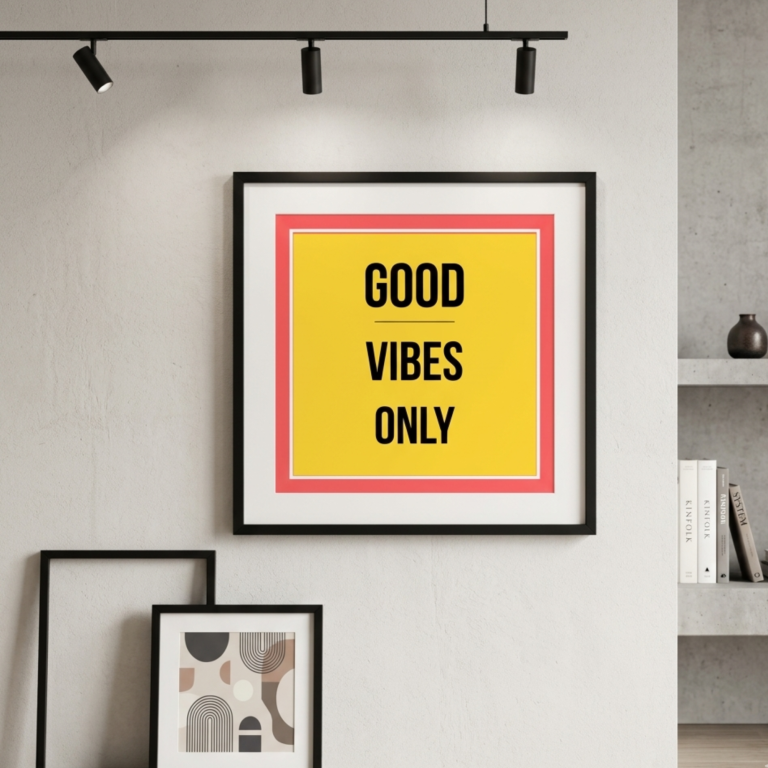
The 90s did not do quiet walls. In the decade of Spice Girls, MTV, and the rise of bedroom culture, walls were literal canvases. They were collages of personality, which means that they were loud and layered and completely, defiantly personal.
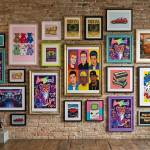
A 90s maximalist gallery wall captures that energy in grown-up form. It is a curated explosion of prints, photographs, textures, and frames layered together in a way that feels deliberate and alive, and somehow also completely effortless.
The good news is that this look is actually one of the most forgiving and accessible gallery wall styles to attempt in your cozy space. The rules are different here, most important being that imperfection is intentional, eclectic is the point. And there is no single right answer, which means you are far harder to get wrong than you think.
This guide walks you through the entire process from concept to nail, including choosing your prints, planning your layout, selecting your frames, and hanging it all so it looks like something from an editorial shoot rather than a first attempt.
First: Understand What Makes a Gallery Wall Feel ’90s
Before you buy a single print or pick up a hammer, it helps to understand the visual language of the 90s maximalist aesthetic, because it is distinct from other gallery wall styles and knowing its characteristics helps you make better decisions at every stage.
The 90s maximalist gallery wall is defined by:
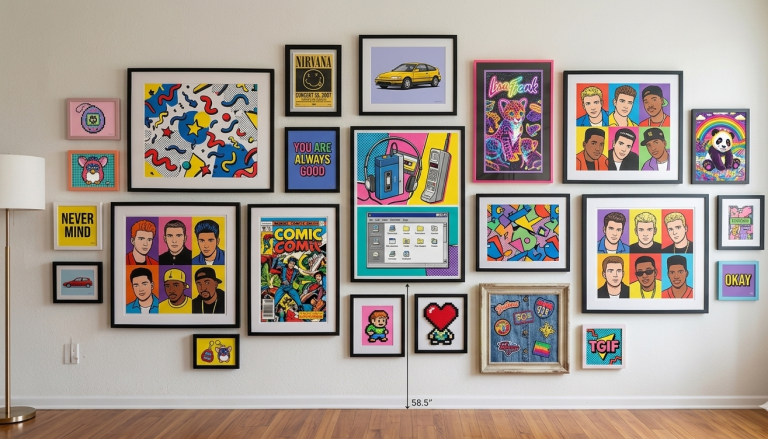
- Layering and density — frames sit close together, sometimes overlapping slightly, with little empty wall visible between them. The wall feels full without feeling chaotic.
- Mixed frame styles and sizes — a large statement piece anchors the arrangement while smaller pieces cluster around it. Frames mix black, gold, dark wood, and occasionally mismatched ornate styles.
- Bold, expressive print content — typography-heavy prints, retro illustrations, bold colour blocks, fashion references, abstract shapes, and cultural imagery coexist side by side.
- Colour that feels curated but not matched — the palette is consistent in feeling even when the individual pieces vary. Warm terracottas, deep burgundies, mustard yellows, forest greens, and cream tones appear across different prints in different ways.
- Personal and cultural references — unlike a purely aesthetic gallery wall, a 90s maximalist wall feels like it belongs to a specific person with specific tastes and specific memories.
- Texture mixing — frames are not the only thing on the wall. Macrame, fabric panels, small mirrors, vinyl records, polaroids, and pennants all belong in this aesthetic.
Hold these characteristics in mind as a reference point throughout the process. Every decision you make (print, frame, spacing, size) can be measured against this list.
Step 1: Choose Your Anchor Print
Every great gallery wall has an anchor, this is one piece that is significantly larger than everything else, positioned at the visual centre of the arrangement, and strong enough to hold the eye while the surrounding pieces add depth and detail.
Your anchor print sets the tone of your entire gallery wall. Get this right, and everything else becomes easier, because every subsequent decision is made in relation to this one piece.
What makes a strong 90s maximalist anchor print:
- Size — aim for at least 18×24 inches (A2 or larger). Bigger is almost always better for an anchor piece in a maximalist arrangement.
- Visual weight — bold typography, a strong central image, a high-contrast colour palette, or significant pattern density. An anchor print that is too subtle disappears into the arrangement.
- Colour leadership — the colours in your anchor print become the palette that the rest of your wall responds to. Choose an anchor whose colours you genuinely love and want to live with.
- Cultural resonance — the best 90s anchor pieces have a feeling of reference or nostalgia. A bold retro typography print, a maximalist botanical illustration in a period-appropriate palette, or an abstract composition in jewel tones all carry that energy.
💛 Agas Home: The 90s Maximalist Wall Art Bundle was designed specifically for this purpose. The large-format prints in the bundle make strong anchor pieces. Download instantly from the Agas Home Payhip Store.
Once you have chosen your anchor print, hang it first or at a minimum, mark its position on the wall before you plan anything else. Everything else arranges itself around this piece.
Step 2: Build Your Print Collection
A 90s maximalist gallery wall typically requires between eight and fifteen pieces for a standard wall section. This sounds like a lot, but the arrangement only works at density since a sparse gallery wall in this aesthetic reads as unfinished rather than restrained.
Think of building your print collection in three categories:
Category One — Statement Prints (2–3 pieces)
These are your largest pieces after the anchor and typically measure at 11×14 to 16×20 inches. They have a strong visual presence and sit close to the anchor in your arrangement, extending its visual reach. They should feel related to the anchor in palette or energy without being identical.
Category Two — Mid-Size Prints (4–6 pieces)
These are your 8×10 and A4-size pieces and are the workhorses of the arrangement. They fill the middle ground between your statement prints and your smallest accents. This is where you can introduce more variety in content, perhaps a mix of typography, illustration, and abstract prints at this scale creates visual rhythm without visual noise.
Category Three — Small Accents (3–5 pieces)
These are your 4×6 and 5×7 pieces, and they are polaroid-size, postcard-size, and small square formats. They tuck into gaps, cluster in corners, and add the feeling of accumulation and personality that is so central to the 90s maximalist aesthetic. Polaroid photographs, small illustrated prints, and bold typographic mini-prints all work beautifully here.
Mixing print sources for an authentic feel:
- Digital printable wall art — download, print at home or at a print shop, frame. Highest quality control and most cost-effective for building a large collection quickly.
- Vintage market finds — original 90s magazine pages, vintage posters, old postcards. These add genuine period authenticity that no reproduction can fully replicate.
- Personal photographs — printed in Polaroid format or on matte paper. A few personal images among curated prints make the wall feel lived-in and real.
- Zazzle or print-on-demand pieces — custom printed on demand in the exact size you need. Ideal for anchor and statement pieces where print quality matters most. View my Zazzle collection here.
💛 Pro tip: Print some pieces at home on matte photo paper and some at a professional print shop. The slight variation in paper texture and finish actually adds to the layered, collected feeling of a maximalist wall.
Step 3: Select Your Frames
Frame selection is where most people make the gallery wall more difficult than it needs to be. They try to match everything perfectly (same frame, same colour, same width) and end up with a result that looks corporate rather than curated. In the 90s maximalist aesthetic, the frames are part of the art.
The maximalist frame approach:
- Lead with one dominant frame style, typically black or dark wood, for 50–60% of your frames. This creates enough cohesion that the wall reads as intentional.
- Introduce a secondary frame style for 25–30% of the pieces, such as warm gold, brass, or ornate vintage-style frames, which greatly add richness and period-appropriate glamour.
- Allow a few wild cards by adding one or two frames that break the pattern entirely. A chunky white frame, a thin silver frame, or even a frameless float mount adds the eclecticism the style needs.
Frame finishes that feel authentically 90s:
- Matte black — the most versatile, works with any colour palette, feels modern and editorial
- Aged gold or antique brass — warm, rich, period-appropriate, particularly beautiful with terracotta and jewel-tone prints
- Dark walnut wood — warm and natural, grounds the arrangement and prevents it from feeling too graphic
- Ornate vintage-style — a few frames with decorative moulding add a maximalist drama that flat frames alone can’t achieve
Do not buy all your frames at once. Start with your anchor piece and two or three statement prints framed, arrange them roughly on the wall, and then add frames incrementally. This approach lets the arrangement evolve naturally rather than being locked into a plan that may not work in practice.
💛 Budget tip: Charity shops, car boot sales, and secondhand marketplaces are exceptional sources for mismatched frames at very low cost, and secondhand frames often have the slight imperfection and patina that makes a maximalist gallery wall feel genuinely collected rather than bought-as-a-set.
Step 4: Plan Your Layout
Unfortunately, this is the step most people skip, and yet, it is the reason most gallery walls end up with holes in the wrong places and prints hung at awkward heights. So, let’s avoid that mess, shall we? Planning your layout before you touch a nail saves you significant time, wall damage, and frustration.
There are three reliable methods for planning a maximalist gallery wall layout. Choose the one that suits your working style.
Method 1: The Paper Template Method (Most Precise)
- Cut pieces of kraft paper or newspaper to the exact size of each framed print.
- Label each template with the print it represents.
- Using low-tack painter’s tape, arrange the templates on your wall in your planned layout.
- Step back and assess, and adjust until the arrangement feels right.
- Mark the nail position on each template while it is still on the wall.
- Hammer nails through the templates at the marked positions.
- Remove the paper and hang your frames.
Method 2: The Floor Layout Method (Most Intuitive)
- Lay a large sheet, blanket, or taped outline on the floor in the exact dimensions of your planned wall section.
- Arrange all your framed prints within this space, moving them around freely until the layout feels right.
- Photograph the final layout from directly above.
- Use this photograph as your reference while hanging.
Method 3: The Organic Build Method (Most 90s)
- Hang your anchor print first at the correct height (see Step 5).
- Add your two or three statement prints, working outward from the anchor.
- Fill in with mid-size and small prints, stepping back after each addition.
- Adjust as you go and note that this method embraces organic development over precise planning.
The organic build method feels most appropriate to the 90s maximalist aesthetic, and it is genuinely the most natural way to build this style of wall. The key is having enough prints available that you can make choices as you go rather than forcing a predetermined arrangement to work.
Layout principles to follow regardless of method:
- Anchor at eye level — the centre of your anchor print should sit approximately 57–60 inches from the floor, which is the standard eye-level hanging height.
- Keep spacing tight — 2–3 inches between frames feels maximalist. More than 4 inches starts to feel sparse.
- Distribute visual weight — balance large pieces across the arrangement rather than clustering them all in one area.
- Vary orientation — mix portrait and landscape frames throughout. A wall of all portrait prints feels monotonous.
- Let the edges be irregular — a gallery wall with a clean rectangular outline looks too contained. Let some pieces extend higher or lower than others, creating an organic silhouette.
Step 5: Add the Non-Print Elements
This is where a 90s maximalist gallery wall becomes something more than just a collection of framed prints, and where it genuinely separates itself from other gallery wall styles. The decade was defined by layering objects with personal significance alongside images, and your gallery wall should reflect that.
Texture and object additions that belong in this aesthetic:
Vinyl Records
Hung on the wall using record display hooks (available cheaply online), vinyl records add circular forms that break up the rectangular rhythm of frames and carry enormous cultural resonance within the 90s aesthetic. Use albums with beautiful or iconic cover art, and the sleeve facing outward becomes a print in itself. Mix in a few blank-label records for purely textural effect.
Macrame or Woven Wall Hangings
A small macrame piece tucked into a corner of the arrangement introduces organic texture and the handmade quality that was central to 90s bedroom decor. It does not need to be large, even a small woven piece adds warmth and dimension that flat prints cannot provide.
Mirrors
One small decorative mirror within the arrangement catches light, adds depth, and creates the illusion of more space. This is practical in a maximalist arrangement that could otherwise feel dense and heavy. Choose an ornate or vintage-style frame for the mirror to keep it consistent with the aesthetic.
Polaroids and Photographs on Clips
A string of fairy lights or a thin wire with small clips, hung across part of the gallery wall with Polaroid photographs attached, adds the intimate personal quality that makes a maximalist wall feel truly inhabited. This is the detail that makes visitors stop and look closely.
Pennants and Fabric Panels
A felt pennant, a vintage sports banner, or a small fabric panel with lettering adds softness and nostalgia in equal measure. These are distinctly 90s objects that carry the period’s energy immediately and without effort.
💛 Styling note: Aim for at least two non-print elements in your gallery wall arrangement. One feels like an accident. Two or more feels like a decision.
Step 6: Hang It — Practical Guidance
The physical hanging process is where anxiety tends to spike. Holes in walls feel permanent in a way that a floor arrangement does not. Here is how to approach it practically and confidently.
Tools you will need:
- Hammer and picture hooks or nails — picture hooks are preferable as they distribute weight better than nails alone
- Level app on your phone — far easier and more accurate than a physical spirit level for gallery wall work
- Pencil for marking
- Tape measure
- Low-tack painter’s tape for paper templates
- A literal step back after every single addition
The hanging sequence:
- Hang the anchor print first. Get this perfectly level and at the correct height before touching anything else.
- Hang your two largest statement prints next, positioning them in relationship to the anchor.
- Step back and assess the three-piece grouping from across the room. Adjust if anything feels off before continuing.
- Add mid-size prints in clusters, working outward from the centre grouping.
- Fill gaps with small accent prints, tucking them into spaces where the arrangement feels thin.
- Add non-print elements such as include records, macrame, and mirrors last. These are the final layer and their exact position is easiest to judge once the print arrangement is complete.
- Step back, look at the full wall, and identify any areas that feel too heavy or too sparse. Adjust accordingly.
💛 The most important instruction: Step back after every single addition. What looks right from two feet away often looks wrong from eight feet away. The distance reveals the arrangement as a whole, and the arrangement as a whole is what matters.
Step 7: Style the Space Around the Wall
A gallery wall does not exist in isolation. The furniture and objects below and beside it are part of the composition, and styling them in relationship to the wall elevates the whole effect from a decorated wall to a genuinely designed space.
What to place beneath a 90s maximalist gallery wall:
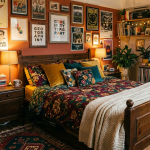
- A dresser or low chest of drawers styled with a few intentional objects, such as a candle, a plant, a small stack of books, and a vintage alarm clock. The surface below the wall is a natural extension of the visual composition above it.
- A low bookshelf with books arranged both vertically and horizontally, with a few decorative objects placed between the stacks. Books with beautiful or colourful spines become part of the overall colour story.
- A bed, if this is a bedroom wall. Layer the bedding in textures and tones that respond to the palette of the gallery wall. The bedding and the wall should feel like they belong to the same visual world.
Lighting that serves the wall:
- A floor lamp with a warm bulb positioned beside the wall casts light upward and creates a gallery-like atmosphere in the evening
- Fairy lights threaded through the arrangement add warmth and the intimate bedroom energy that is so central to the 90s aesthetic
- A directional spotlight or picture light above the anchor print draws attention to the most important piece and creates a sense of drama
The 90s Maximalist Gallery Wall Checklist
Before you begin, use this checklist to make sure you have everything you need:
Prints and artwork:
- One anchor print (18×24 inches or larger)
- Two to three statement prints (11×14 to 16×20 inches)
- Four to six mid-size prints (8×10 or A4)
- Three to five small accent prints (4×6 or 5×7)
- One to two non-print elements (record, macrame, mirror, pennant)
Frames:
- Dominant frame style selected (50–60% of frames)
- Secondary frame style selected (25–30% of frames)
- One or two wild card frames for eclecticism
- All frames sized correctly for their prints
Tools and materials:
- Hammer and picture hooks
- Pencil and tape measure
- Level app
- Kraft paper or newspaper for templates (if using Method 1)
- Painter’s tape
- Step stool if needed
The Wall That Tells Your Story
The 90s maximalist gallery wall is not really about the 90s. It is about the permission the 90s gave us — the permission to take up space, to be expressive, to layer meaning upon meaning upon meaning until a wall becomes a biography.
That permission has not expired. It belongs to anyone who wants a home that feels like it was inhabited by a real person with real tastes and a real inner life — not staged for a catalogue or designed to appeal to the broadest possible taste.
Your gallery wall will not look like anyone else’s, and it should not. The prints you choose, the frames you find, the records you hang, and the photographs you clip are all yours. The arrangement that emerges from your particular collection of things could only ever exist in your specific home.
Start with one print and one frame. Put them on the wall. Then add the next one. The gallery wall builds itself, one decision at a time, until one day you step back and realise it is done — and it looks exactly like you.
→ Read Next: 90s Aesthetic Room Ideas — The Complete Guide
AgasHome
This is a space where we strive to make your lives easier. We're helping you to create cosy, organised homes through simple kitchen systems, home resets & lifestyle habits. We share, learn, educate and have fun!