


Even as I think about how to tackle this topic of how to style plants in small spaces, I’m reminded of a hilarious episode on one of my comfort shows, Keeping Up Appearances, in which the main character, the ultimate wanna-be snob Hyacinth Bucket (pronounced “bouquet”), throws one of her infamous candlelight suppers. She appropriately titles it an “outdoors-indoors luxury barbecue” and endeavours to outdo her imaginary rivals by inviting the famous ‘garden king’, C.P. Benedict. Because if there’s one thing a self-appointed snob like Hyacinth will do, it’s have a VIP at one of her suppers.
Unfortunately, Hyacinth wasn’t able to style the plants in her small dining room without clutter, but we certainly can.
And here’s how.
1. Start With a Simple Plant Styling Plan
Before bringing plants into your home, take a step back and analyze your space. A little planning can make the difference between a room that feels fresh and calming and one that feels overcrowded. Note where the natural light falls during the day because bright spots, windows, and areas near balconies make the happiest homes for plants.
Now look at your surfaces. These are the shelves, tables, countertops and ladders, if any. Are they already busy with decor, art pieces and books? If so, adding more plants there may create visual clutter. Instead, identify those corners that feel empty and abandoned.
A helpful rule is to create two or three plant zones per room rather than scattering plants throughout the room. Grouping plants in intentional spots keeps the room feeling balanced, organized, and effortlessly cozy.
2. Choose Compact Plants That Suit Small Spaces
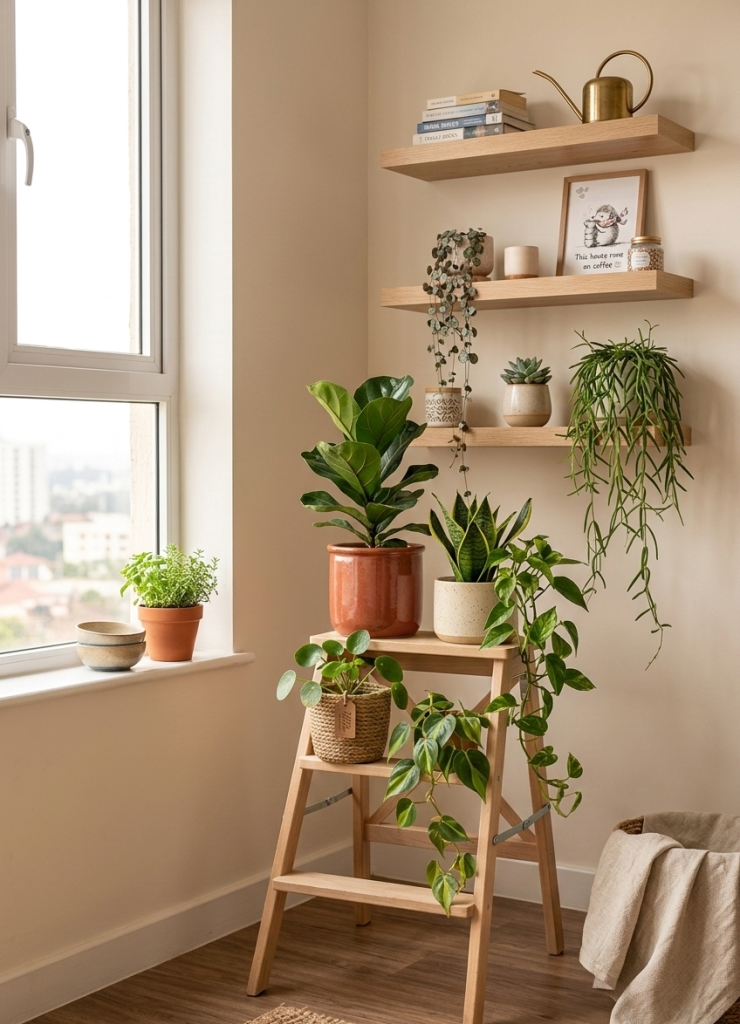
When looking at how to style plants in small spaces, picking the right plants makes all the difference. Large, dramatic plants can be beautiful, yes, but they can easily overwhelm a small room and make it feel crowded. Instead, look for compact plants that bring nature without taking up too much space.
Some wonderful options for small homes include snake plants, pothos, ZZ plants, string of pearls, small succulents, and air plants. These stay relatively manageable and adapt well to shelves, windowsills, desks, and small corners. Many of them also require minimal maintenance, making them perfect if you’re still growing in your plant care journey.
And of course, another advantage of having smaller plants is the flexibility. You can easily move them around your space until you find the perfect spot. With the right small plants, even the coziest apartment can feel fresh, lively, and beautifully styled.
3. Use Vertical Space Instead of Floor Space
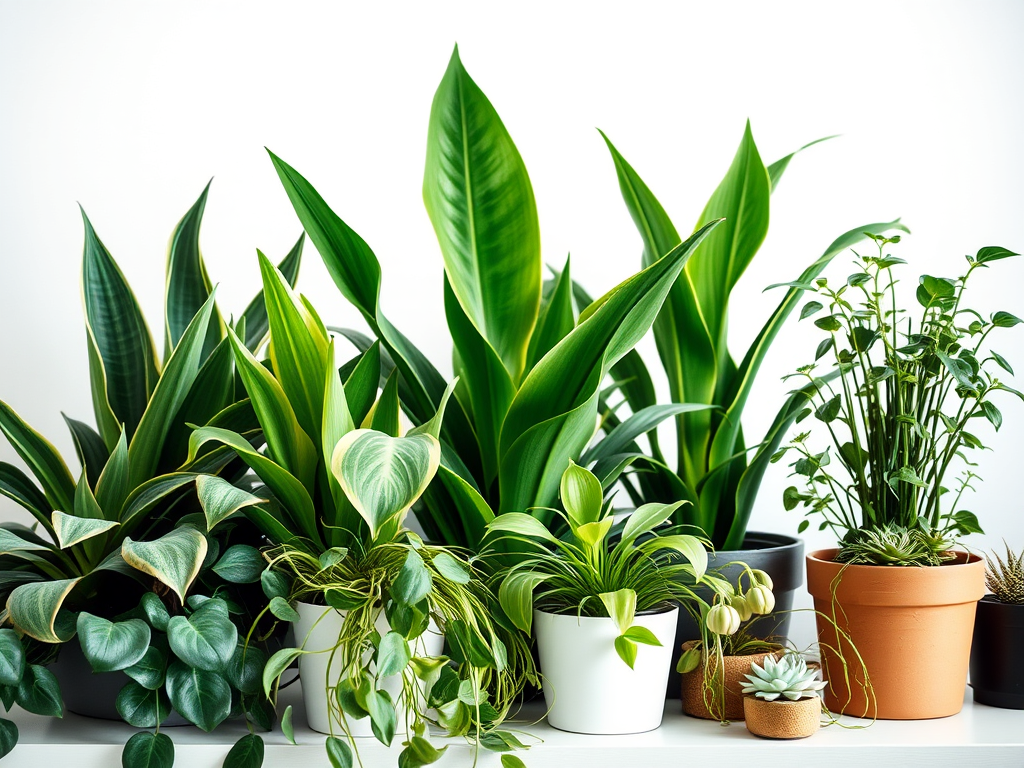
When floor space is limited, as it usually is in smaller spaces, the best solution is to think upward. Utilising your vertical space increases explorable plant options without crowding your tables, counters, or hallways. Instead of placing every plant on the floor, look for ways to style greenery along your walls and higher surfaces.
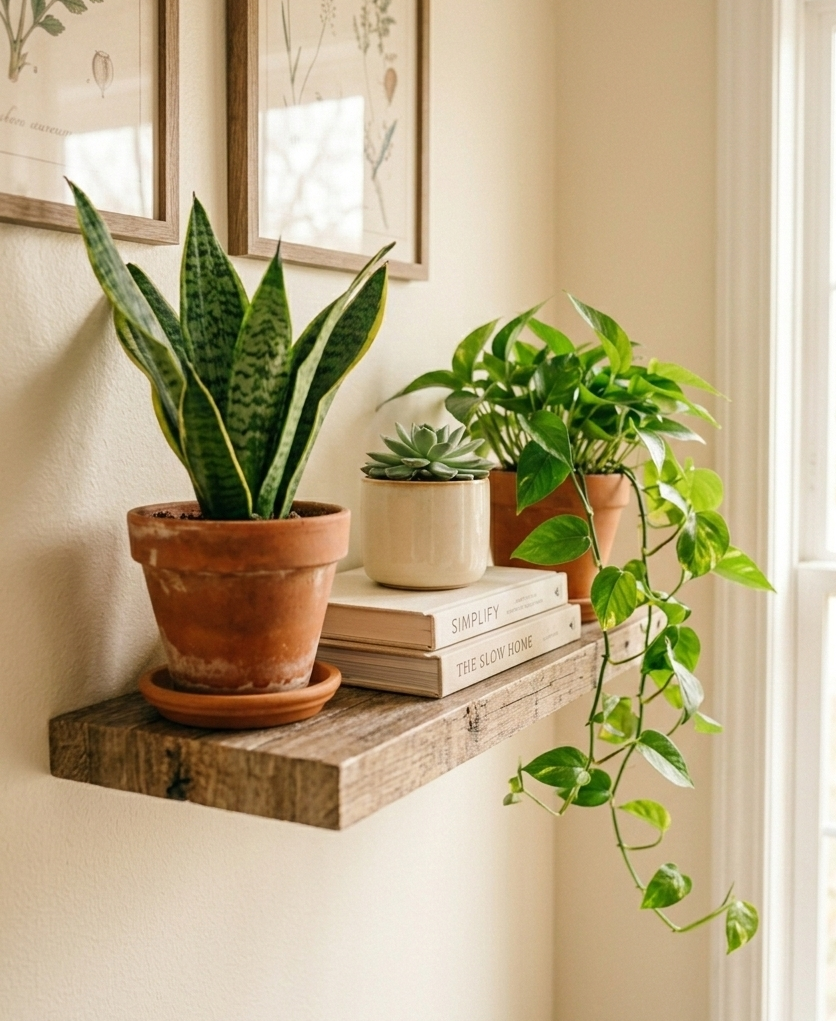
Wall-mounted planters are a creative way to turn a bland wall into a real-life display. Floating shelves can also hold a few small pots while adding character to the room.
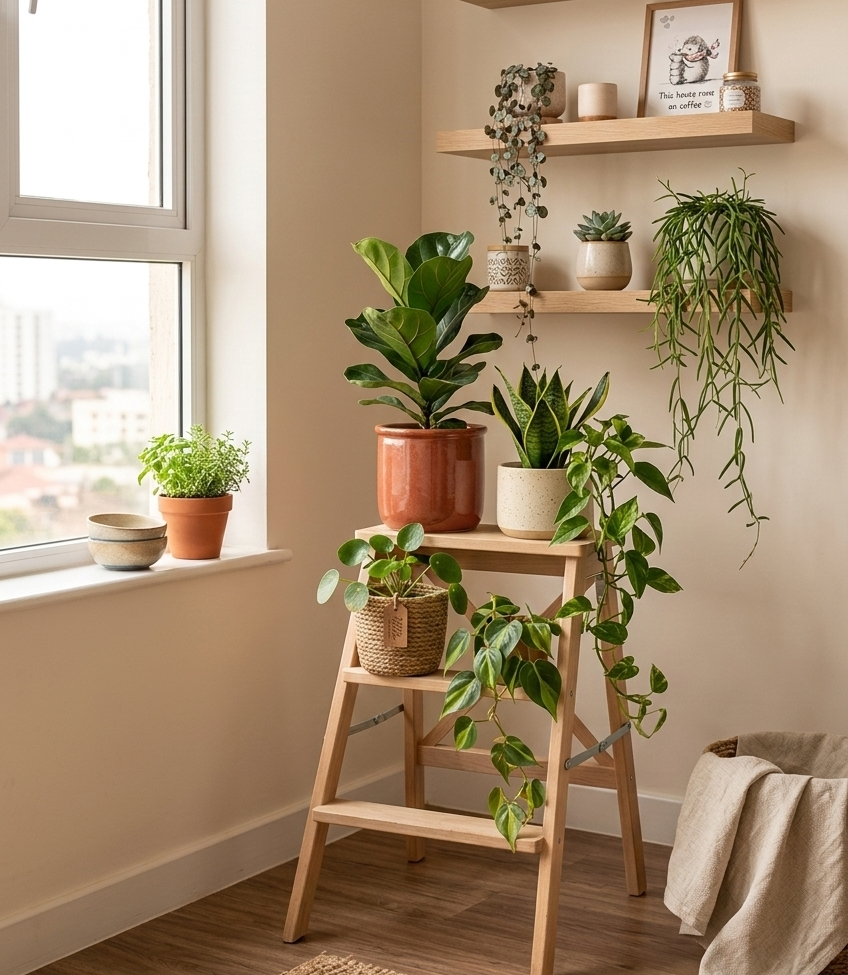
Hanging macramé plant holders bring a cozy, relaxed feel and are perfect near windows where plants can soak up natural light. Plus, they inject a shot of that boho theme into your decor. Lastly, you can also use ladder-style plant stands to display several plants in one tidy corner.
Therefore, by growing upward instead of outward, your plants become part of the room’s decor while keeping your space open, airy, and clutter-free. It’s a win-win!
4. Style Plants in Small Clusters (Not Everywhere)
What does this mean, you ask? Well, one common mistake observed when practising how to style plants in small spaces is getting carried away and placing plants all over—one on every surface, shelf, and corner.
While the intention is to add greenery, this can end up making the space feel cluttered, and we don’t want that. A better approach is to style plants in small clusters, creating a cozy little plant moment in one spot. Sort of like a monument lol.
Instead, try placing two or three plants together to form a simple vignette. For example, group one medium-sized plant with two smaller ones, pair a trailing plant with a tiny cactus, or arrange three small pots at different heights on a shelf or table. Varying the height makes the arrangement feel more dynamic and visually interesting.
A simple trick is to place one plant on a small stack of books or a plant stand to create layers. Keeping clusters small and intentional helps your plants feel like part of your decor rather than random additions around the room.
5. Use Multi-Functional Furniture for Plant Displays
In a small home, it’s efficient when furniture is multi-functional. I mean, which practical small home owner doesn’t appreciate that? So, instead of adding extra plant stands that take up space, identify surfaces you already have and style them creatively.
Console tables in entryways are perfect for a small plant or two that create a welcoming first impression. Window ledges are another ideal spot since most plants love natural light.
Bookshelves can easily hold a blend of books, decor, and a few small pots to add life and colour. Even coffee tables or bar carts can become charming plant stations when styled with a trailing plant or a small succulent.
But if you want to display several plants in one place, consider a multi-tier plant stand. It lets you arrange plants at different heights while keeping everything neatly contained in one cozy corner.
6. Choose Pots That Match Your Decor Style
Plant pots may seem like small details, but they can make a big difference in how your space feels. When every plant sits in a completely different pot style or color, the room can start to look busy and chaotic. Instead, aim for a simple, cohesive look that complements your home’s decor.
A helpful tactic is to stick to two or three color tones throughout the room. Soft, natural shades like cream, terracotta, soft beige, and muted green work beautifully in cozy spaces.
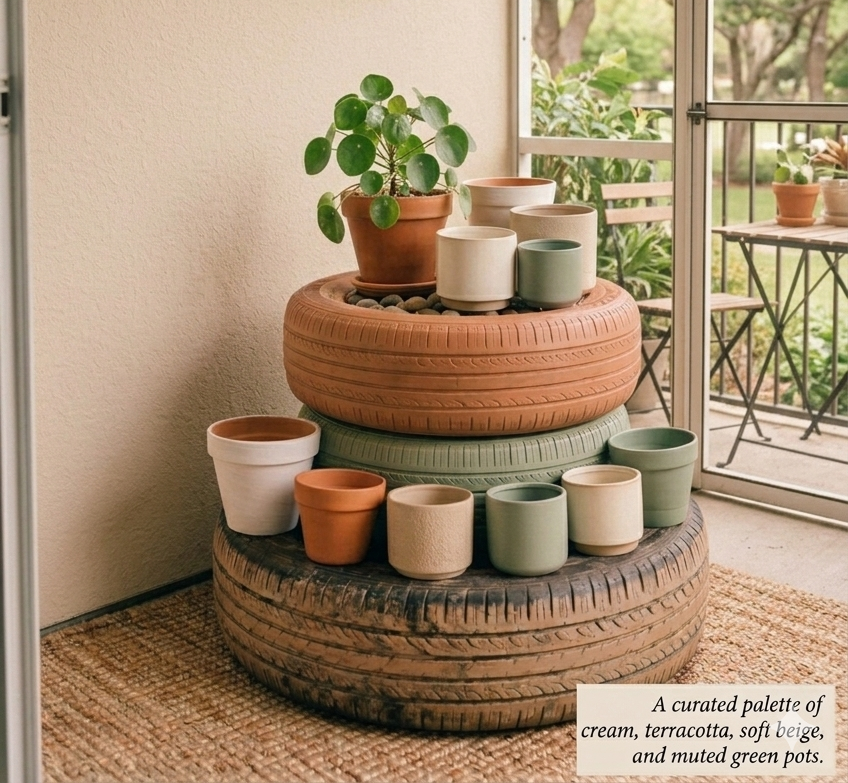
You can also choose pots made from similar materials, such as ceramic, terracotta, or woven baskets, to create a sense of harmony.
7. Let Trailing Plants Do the Decorating
Trailing/climbing plants are a convenient alternative for small apartments because they add beauty and movement without using valuable floor space. Remember when we talked about going upwards instead of outwards to save space?
Instead of growing tall and bulky, these plants gently spill over the edges of their pots, creating a soft, relaxed look that instantly makes a room feel more inviting.
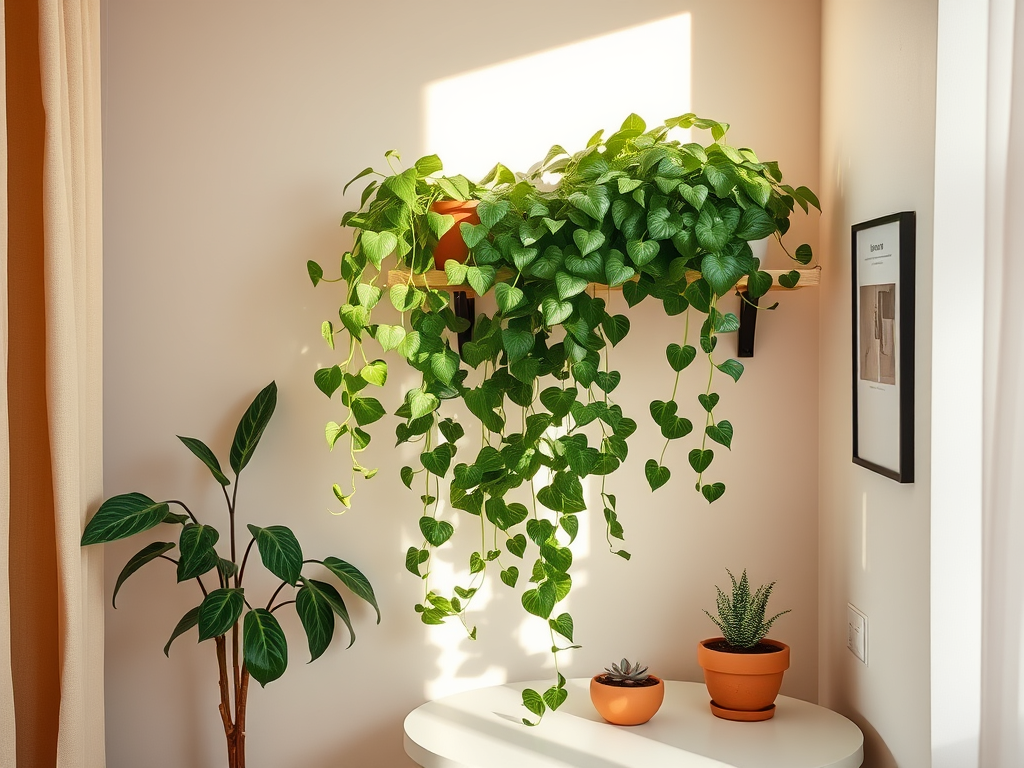
Some lovely trailing plants to try include pothos, string of pearls, heartleaf philodendron, and ivy. These plants are not only attractive but also quite forgiving, which makes them great for beginner plant owners.
For easy styling, place trailing plants on shelves, window sills, or high cabinets where their vines can naturally drape downward. You can also place one on the top shelf of a bookshelf so the leaves cascade along the side. If the vines grow too long, trim them and place the cuttings in water to grow new plants. This simple trick keeps your display neat while helping your plant collection grow.
8. Leave Breathing Room Between Plants
When decorating with plants in a small space, a little restraint goes a long way. It’s tempting to fill every shelf and corner with greenery, but when plants are packed too closely together, the room can start to feel heavy and cluttered. Giving each plant a bit of visual breathing room helps the space feel calm, airy, and thoughtfully styled.
A helpful rule is to leave a few inches of space between pots whenever possible. This allows each plant’s shape and leaves to stand out rather than blending into one large mass of greenery. If a shelf or corner begins to look crowded, try removing one plant and placing it in another room.
Another tip is to rotate plants every few weeks to refresh your decor. Sometimes simply spreading plants across your home makes the entire space feel lighter and more balanced.
9. Rotate Plants Seasonally
Being a plant mom or dad comes with its own level of responsibility; it’s not all about placing the plants and completely forgetting about them.
And when it comes to learning how to style plants in small spaces, you’ll discover that rotating your plants every few months is a simple way to keep your home feeling ‘new. Just like swapping out seasonal decor, moving plants to new spots every few weeks can instantly change the feel of a room.
For example, a plant that thrived on your bookshelf during the cooler months might look beautiful on a sunny windowsill in spring or summer. Additionally, rotating your plants can help them receive better sunlight, especially if some areas of your home get better light access at different times of the year.
A practical tip is to keep one or two plants in a different room or on a balcony and swap them occasionally with the ones on display. Even moving a single plant (from a coffee table to a shelf, for instance) can shift the atmosphere of the entire room in a refreshing way.
10. Style Plants Where They Feel Natural
Plants look their best when they feel like a natural part of your home, rather than an afterthought. When thoughtfully placed, they don’t just add greenery—they enhance the cozy, inviting atmosphere of any room. The key is to think of each plant as a living decor accent rather than something simply filling space.
Natural spots to style your plants include near windows, where they can soak up sunlight; beside reading chairs, creating a peaceful nook; on kitchen shelves, adding life to functional spaces; or next to entryway tables, making your home feel welcoming the moment someone walks in. The options are endless, it’s up to you to ëxplore them.
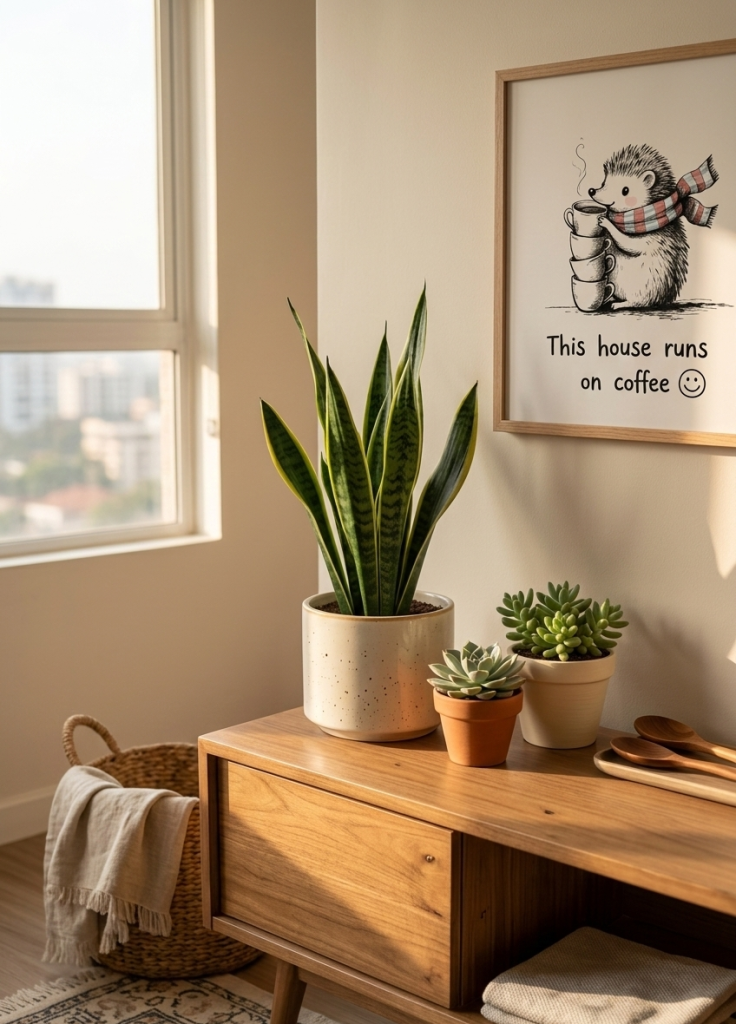
A practical tip is to observe your daily routine and notice where your eyes naturally rest. Placing plants in these areas ensures they feel integrated into the space. Even a single small plant in the right spot can transform a corner into a fresh, inviting focal point.
Conclusion: Small Spaces Can Still Be Green and Beautiful
Remember, styling plants in a small space is all about balance. By choosing the right plants, using vertical space, and keeping displays intentional, you can enjoy the beauty of greenery without overwhelming your home.
With a few thoughtful choices, even the smallest apartment can feel like a peaceful, plant-filled sanctuary.
Start small, style slowly, and let your plants bring life and calm into every corner of your cozy home.

Other Articles
Create a Calm Morning Routine at Home | 10 Simple Tips
Create a Cozy Kitchen: Tips for Beginner Cooks